

What a Multicultural Wedding Dance Floor Actually Requires

Two families walk into a reception. One grew up on Afrobeats and Zouk. The other grew up on Reggaeton and Top 40. Both sets of parents are watching the dance floor.
This is not a hypothetical. This is a Tuesday for a bilingual wedding DJ.
Multicultural weddings are some of the most joyful, most complex events in the wedding industry. They are also the ones most likely to have a dance floor that splits in half, or worse, empties entirely, if the DJ does not know what they are doing.
Here is what it actually takes to keep every generation and every culture moving.
Understanding the room before the night
A multicultural dance floor does not get built on the night of the wedding. It gets built in the planning conversations weeks before.
The first question is not what music both families like. The first question is who is in the room. Ages, backgrounds, cultural expectations, and energy levels. A Haitian family in their 60s has different expectations than a Nigerian family in their 30s. Both need to be honored. Neither should feel like an afterthought.
A DJ who does not ask these questions in the planning process is guessing on your wedding night.
The biggest mistake couples make
Most couples build two separate playlists. One for each side. Then ask the DJ to alternate.
That approach does not build a dance floor. It divides one.
The goal is not to alternate between two cultures. The goal is to find the connective tissue between them, the grooves, the rhythms, the energy that lives in both worlds simultaneously. Afrobeats and Dancehall share more DNA than most people realize. Konpa and Latin rhythms have been in conversation for decades. A DJ who understands those connections can weave a set that feels like one unified experience, not a compromise.

Language is part of the music
For bilingual and multilingual families, the MC moments matter as much as the music.
An announcement made only in English in a room where half the guests speak French or Haitian Creole tells half the room they are guests, not participants. That feeling compounds over four hours.
Bilingual hosting is not a luxury at a multicultural wedding. It is part of making every person in the room feel like the night was built for them.
Reading the room in real time
No plan survives contact with a live dance floor.
Families bring energy you did not anticipate. A song you expected to land does not. A song you were not planning to play until later is suddenly the exact right call.
This is where experience with multicultural events specifically makes the difference. Knowing how to pivot between a Soca set and an R&B set without losing anyone, knowing when to bring the tempo down and let the older guests breathe before building back up, knowing when a cultural moment needs to be honored and when it needs to transition, that is not something you learn from a playlist. It is something you learn from years of doing it.
What you deserve from your DJ
You deserve a DJ who has done this before. Not a DJ who is willing to try.
The questions to ask before you book: Have you DJ'd multicultural receptions specifically? How do you handle a floor where the two sides have very different music preferences? Can you speak to any of the cultural traditions involved in our reception?
A DJ who has real answers is a DJ who has done the work.
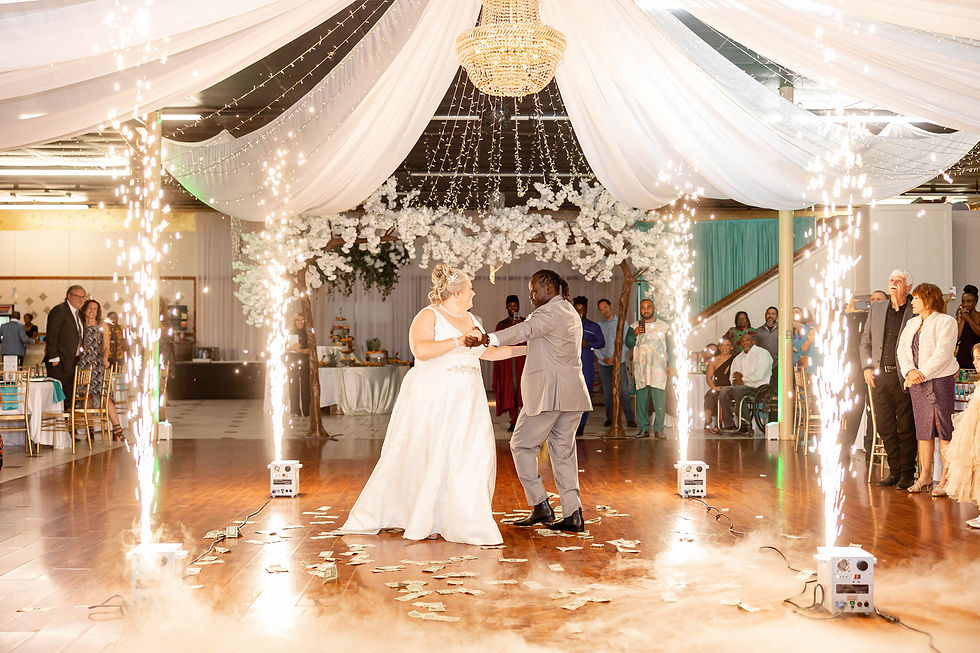
A packed floor where both families are dancing together is not luck. It is preparation, cultural fluency, and the ability to read a room in real time.
Your wedding deserves all three.
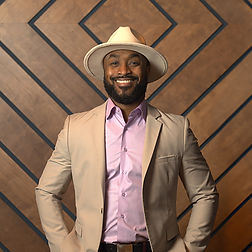
Ray Boyer is a bilingual wedding DJ fluent in English, French, and Haitian Creole. Based in Austin, TX. Bookings through Krystal Collective. Book a consultation


Comments